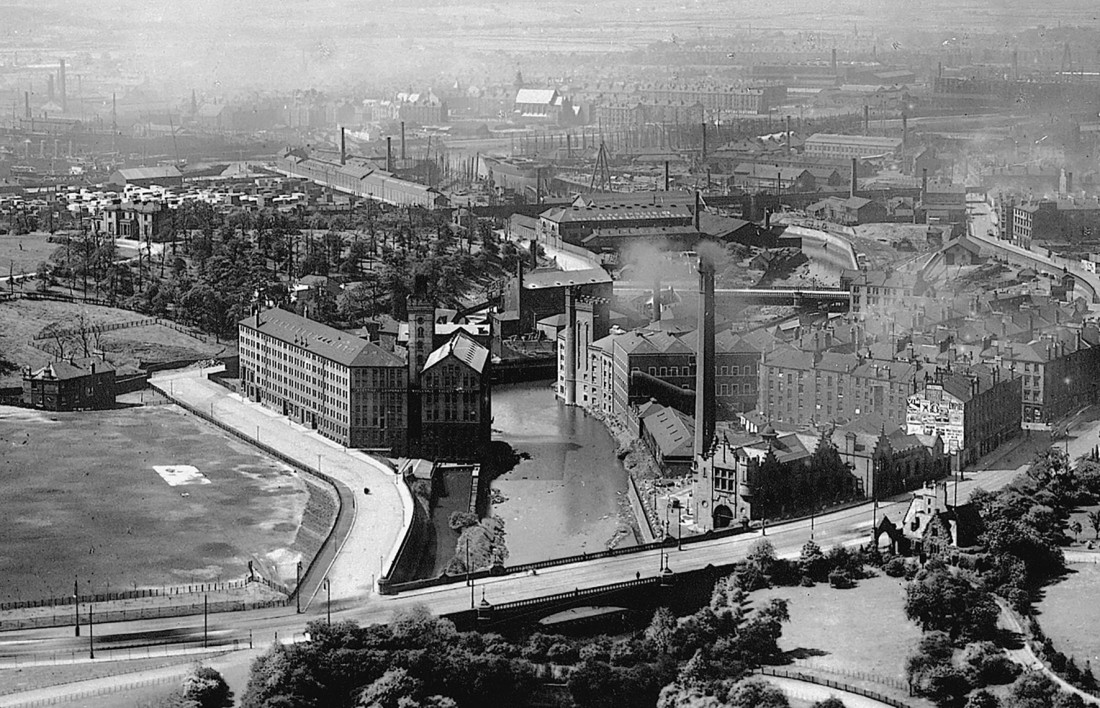
Much is said about the River Clyde’s importance in shaping the story of Glasgow.
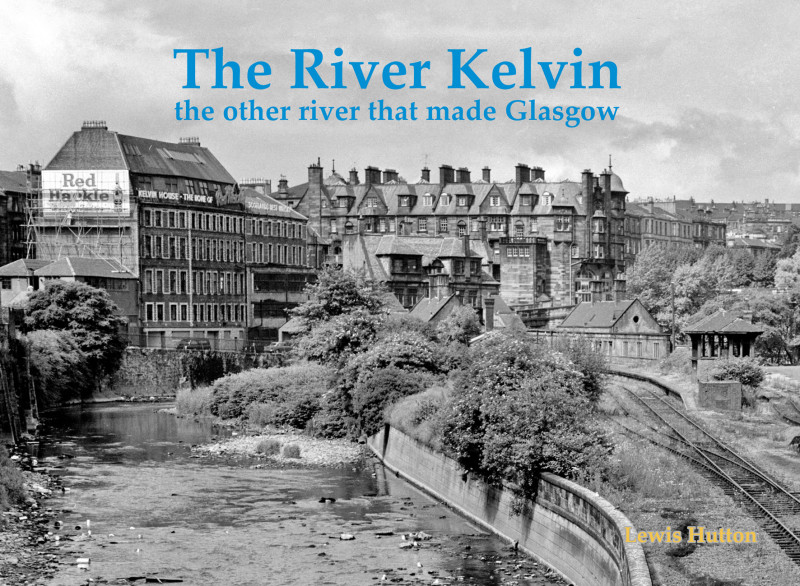
But the city’s other river, and the title of a book out this month from the Stenlake stable, tells a tale of industry and changing society along the course of the River Kelvin.
As the book’s publicity says: “Yes, the Clyde made Glasgow, but the Kelvin quietly did its bit too.
Power
“Rising at Kelvinhead, near Kirkintilloch, the river is unusual in that it starts its 22 miles course flowing gently across a broad plain and flows steeply at its end, before finally joining the Clyde.
“In the past, the power of the river supported a good deal of water-driven industry.”
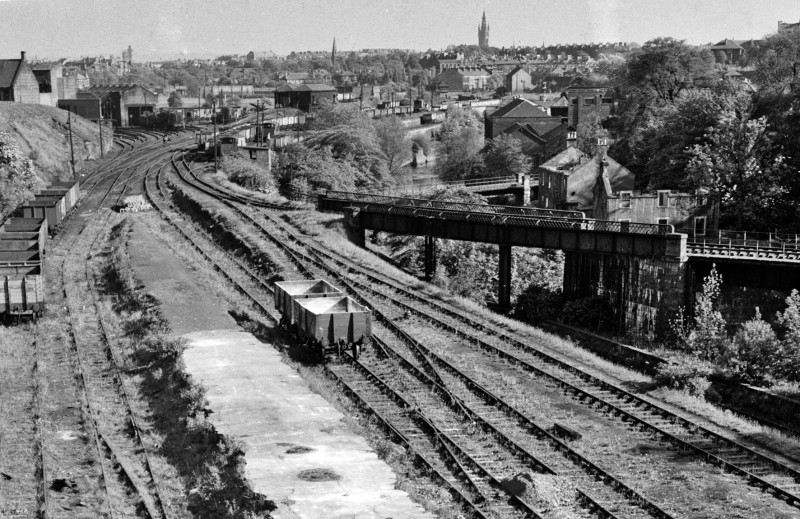
The book began life as a school geography project over 30 years ago, and the author, Lewis Hutton, has since researched the subject more deeply and accumulated the collection of vintage photographs seen in the book, all of which are accompanied by lengthy and detailed captions.
From Kelvinhead the river flows past Kirkintilloch to Cadder (near Bishopbriggs) then on to Killermont, Maryhill, Kelvinside, through the Botanic Gardens and on to Kelvinbridge, Hillhead, Kelvingrove, past the Kelvin Hall and Partick before its confluence with the Clyde.
The book moves through many locations revealing often since-gone views, and drawing on photographs of the author and his father, Guthrie Hutton, taken in the late 80s and during a walk of the river in December 1994.
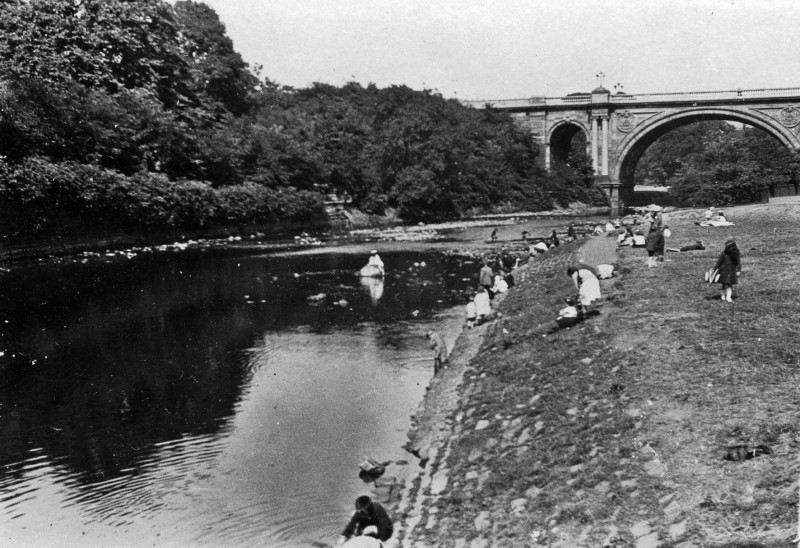
The book also draws on the valuable city archive of the former prominent Scottish architectural and industrial historian John Hume.
From the banks of the River Kelvin to the bustling shipyards where the Kelvin meets the Clyde, the book reveals a city shaped by innovation, industry and community.
The story takes in the bridges that stitched together Glasgow’s growing suburbs. Long-forgotten crossings such as the Old Queen Margaret Bridge, alongside enduring landmarks like Kelvinbridge and Kirklee Bridge, carried generations across the Kelvin.
Beneath their arches, children played on riverbanks, families gathered on summer afternoons, and everyday journeys became part of the city’s shared history.
Along the river, visitors encounter the traces of a vanished industrial world. Railway sidings at Kelvinbridge and Dawsholm once connected communities to a rapidly expanding city, while mills, paper works and pumping stations lined the Kelvin’s banks.
The photographs capture a landscape where trains, factories and waterways worked together to power Glasgow’s growth.
Further downstream, the river’s confluence with the Clyde opens onto the great shipbuilding districts of Partick, Pointhouse and Whiteinch.
Here, forests of cranes dominated the skyline and generations of skilled workers built vessels that travelled the world. By the early 1960s many of these famous yards were approaching the end of their lives, making these images an especially poignant record of a disappearing era.
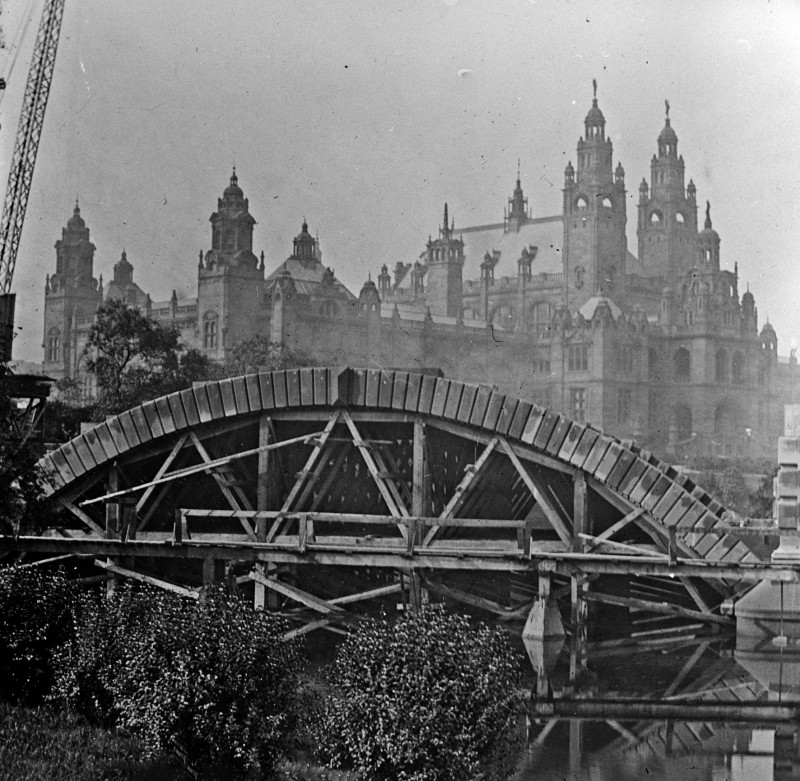
The book also explores moments of civic pride and celebration. The Scottish Exhibition of 1911 drew huge crowds to Kelvingrove Park, transforming the area and funding improvements that still shape the landscape today. Even storms could not diminish the optimism and ambition that characterised the event.
More than a simple record of buildings and streets, this book is a portrait of the people, industries and communities that made Glasgow’s West End what it is today.
Through its pages, familiar places are revealed anew, offering a powerful reminder that every bridge, railway and riverside path has a story worth remembering.
The River Kelvin - The Other River That Made Glasgow. New for November 2026, ISBN 9781807010133, 56 pages 59 illustrations £12.95. Published and distributed by Stenlake Publishing Limited 54 - 58 Mill Square, Catrine, KA5 6RD Tel: 01290 551122 e-mail: sales@stenlake.co.uk Website: https://stenlake.co.uk/book_publishing/
Other books out this month from Stenlake:
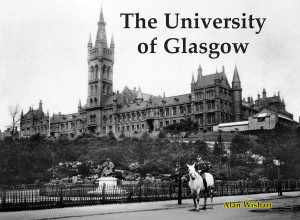
The University of Glasgow - Founded by Papal Bull in 1451, and the fourth oldest university in Britain. Teaching at the university began in the Chapter House of Glasgow Cathedral and continued at the Cathedral until 1573 when it moved to a new site on High Street and then to its present-day home at Gilmorehill. This compact illustrated history by Glasgow graduate Alan Wishart combines period photographs with the story from early days to modern times and finishes by featuring some noted alumni.
The University of Glasgow, ISBN 9781807010010, 48 pages 62 illustrations £12.95.
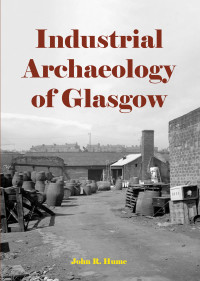
Industrial Archaeology of Glasgow - A new edition of the first part of Professor Hume’s ground-breaking 1974 work on the industrial archaeology of Scotland’s biggest city. Long out of print, it is mostly a reprint of the 1974 text, but illustrated with different photographs, and with some other bits and pieces added. As a basic introduction to the industries that made Glasgow this is second to none. Industrial Archaeology of Glasgow
Industrial Archaeology of Glasgow, ISBN 9781807010119, 176 pages. 120 illustrations £24.95.