Scotland’s first museum dedicated to the art and history of stained glass is to open within the former Lansdowne Church in Glasgow’s west end, celebrating the pioneering work of artist Alf Webster.
The newly envisioned museum of stained glass will occupy the gallery above the Stand comedy club that recently took up residency in the restored landmark building on Great Western Road at Kelvinbridge.
Fact Three, the charitable trust that has been driving the renovation of the former church, has been awarded £250,000 from The National Lottery Heritage Fund, £132,000 from Glasgow City Heritage Trust, and £15,000 from The Architectural Heritage Fund, to support this first phase of the museum project.
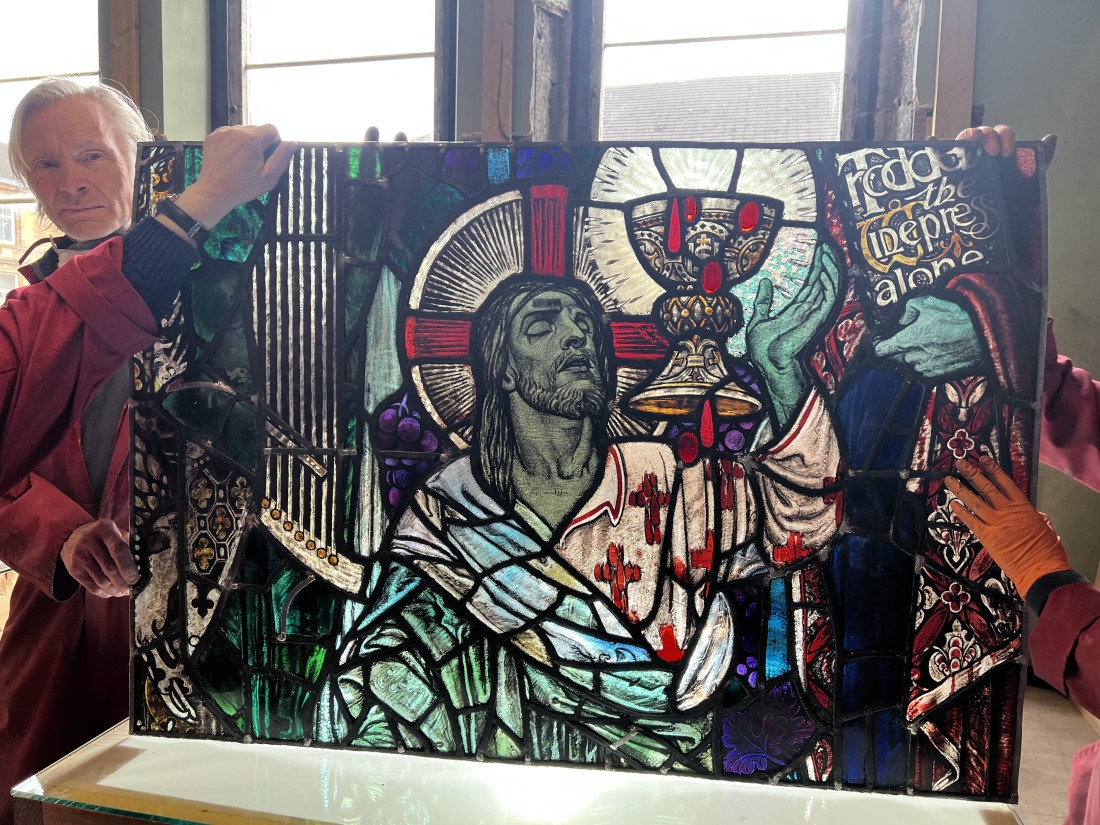
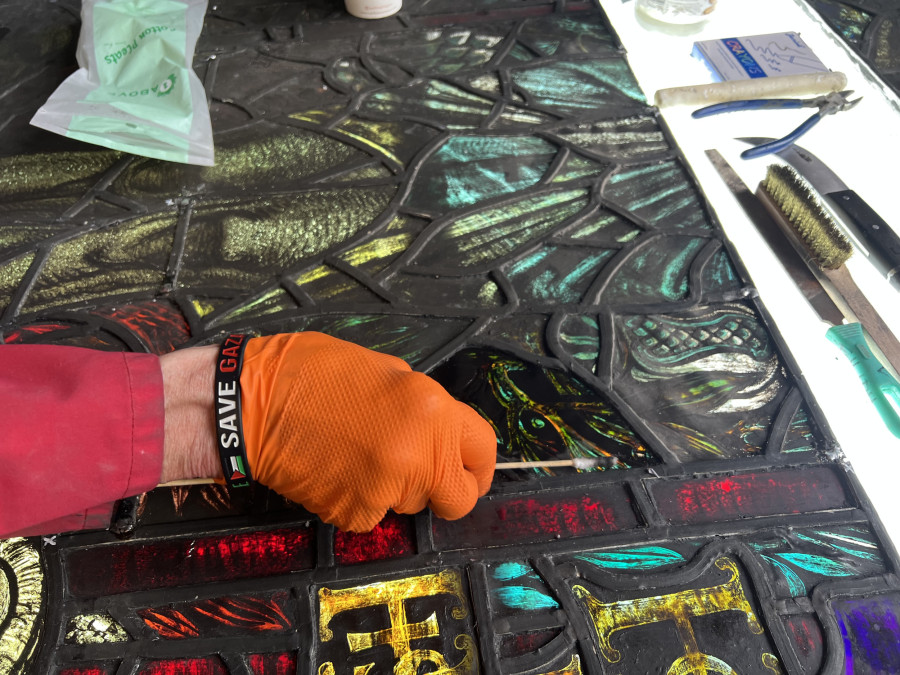
With the funds, the trust has made extensive repairs to 21 stained glass panels that make up of one of two stained glass windows by Webster that adorn the building, and installed a specialised system of secondary glazing for its protection.
Gallery
In addition, the funding has enabled Fact Three to build a viewing platform under the window with a room below for heritage interpretation all accessed from the entrance beneath the impressive steeple on Great Western Road and then through a newly carved stone doorway at gallery level in keeping with the interior of the building.
The project has also funded original research into Alf Webster’s life and career which will be brought to life in the heritage room beneath the window.
Plans for the Alf Webster Museum of Stained Glass, announced today, are the culmination of plans by Fact Three that has been working tirelessly since 2013 to repair and conserve the historic building.
Early next year the plan is to open the viewing platform and interpretation space up to the public as part of the building’s regeneration.
The museum is one component of the new uses secured for the building and has as its theme the ‘Accessing Websters’ project which aims to share the story and art of Alf Webster through a variety of ways both digitally and from within the church building.
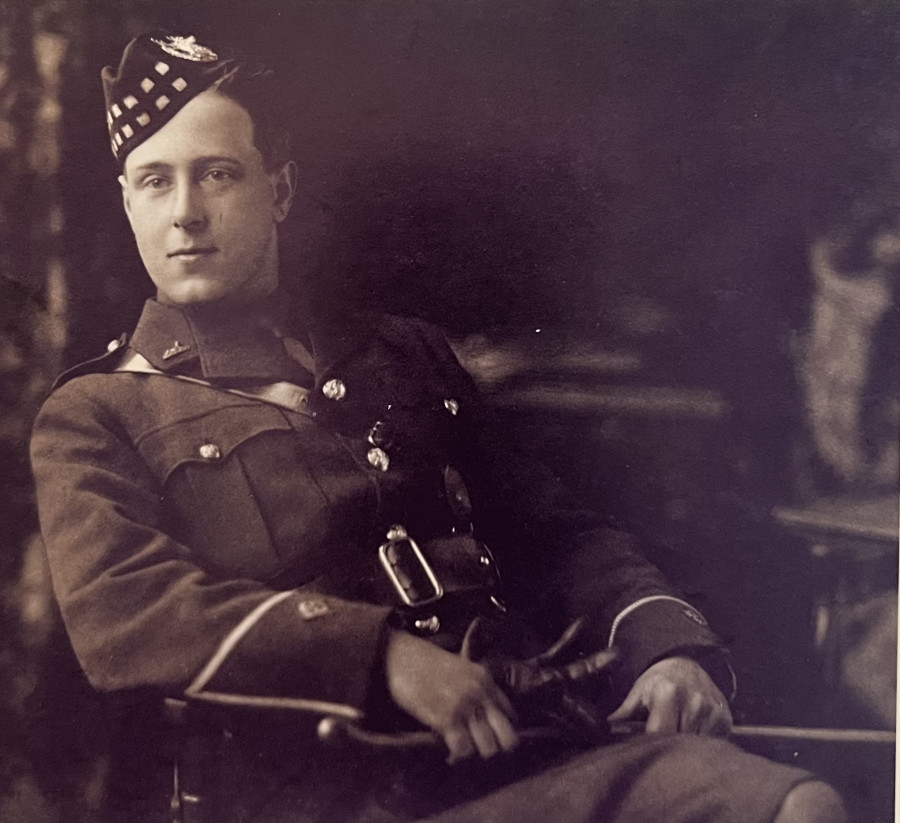
Webster was a talented early 20th-century Scottish stained glass artist who created intricate, masterfully coloured windows for prominent churches and landmarks before his career was tragically cut short during World War I, aged just 31.
Stained glass of international quality can be found throughout the public, ecclesiastical and residential buildings within and around the city and this is a heritage that deserves to be celebrated - David Robertson
David Robertson, trustee of Fact Three said: “Fact Three and all those invested in the Accessing Websters project are immensely proud to announce our plans today, to create Scotland’s first stained glass museum. The intimate, eye-level access this will offer to the restored windows will be a unique cultural landmark for Glasgow.
“The city between 1864 and 1914 was one of the main workshops of the world and stained glass designers and studios in Glasgow were internationally famous not least through the creation of ship interiors for Clyde-built liners. Stained glass of international quality can be found throughout the public, ecclesiastical and residential buildings within and around the city and this is a heritage that deserves to be celebrated.
“To be in the position we are in today is only possible thanks firstly to the tireless work of our conservators and volunteers with a shared passion for the works of Alf Webster, and the funding we have received from key partners. Without these twin pillars of support, Glasgow was at risk of losing some of the most unique and historical displays of art and craftsmanship of the 20th century – instead we can now prepare to showcase the legacy of Alf Webster to the world.
“Today is an important milestone. However, while much significant effort is behind us, further hard work lies ahead. Our ambition to establish and open the Alf Webster Museum of Stained Glass – Scotland’s first – will only be fully realised with more collaboration and support.
“We welcome engagement with any funders, groups or individuals excited by our vision for the museum and wider project as our work continues to deliver a museum which is a fitting tribute to Alf Webster within an iconic historic building that the city of Glasgow can be truly proud of.”
Dr Karen Mailley, research and outreach lead for the project, said: “The Alf Webster Museum of Stained Glass will be dedicated to the research and presentation of the city’s stained glass. We are fortunate in having one of the few UK ICON Accredited Conservator-Restorers, Rab MacInnes, who is a British Society of Master Glass Painters Member living and working near to the project.
“With the focus on one of Scotland’s endangered traditional skills, we are also lucky to have one of Historic Environment Scotland’s Stained Glass Craft Fellows, Gordon Muir, working on the team.
“The Accessing Websters project has the promotion of traditional skills at its core. For more than three decades Fact Three and its sister charity Four Acres Charitable Trust have been supporting the use of traditional skills over several Glasgow buildings including Lansdowne Church and Cottiers.
“Work at Cottiers and Lansdowne has provided many opportunities for traditional skills – such as slab laying, stone pointing, cutting and indenting stone, stained glass making, internal carpentry and painted decoration – to be passed down to the next generation and new team members, a further legacy for the brilliance of Alf Webster.”
Caroline Clark, Director for Scotland, National Lottery Heritage Fund said: “Restoring Alf Webster’s beautiful stained glass and delivering an outreach programme is unlocking more of Glasgow’s artistic and cultural history for new audiences.
“Thanks to National Lottery players ‘Accessing Websters Heritage’ will protect and celebrate the craftsmanship and artistry which is a hallmark of Glasgow’s unquestioned importance as a global city of creativity and design.”
About Webster and the windows
Although Webster’s stained glass career was relatively short in comparison to his contemporaries, through new research, as part of the project, conservationists are discovering that his output was prolific.
Born in Glasgow’s south side in 1883, Webster studied Architecture and Modelling at the Glasgow School of Art (GSA) before studying under Stephen Adam Senior (1848-1910) in Adam’s Glasgow studio. During this period, GSA was an exciting place to study with influential individuals such as its architect Charles Rennie Mackintosh, artistic tutor the symbolist Jean Delville, Ann Macbeth, Jessie Newbery and Director Fra Newbery studying or teaching there. In 1904, Webster began an apprenticeship at Adam Senior’s studio at 168 Bath Street in the city centre which was known as the ‘Adam Studio’. After Adam’s death in 1910, Webster took over the studio until his own untimely death during WWI in 1915.
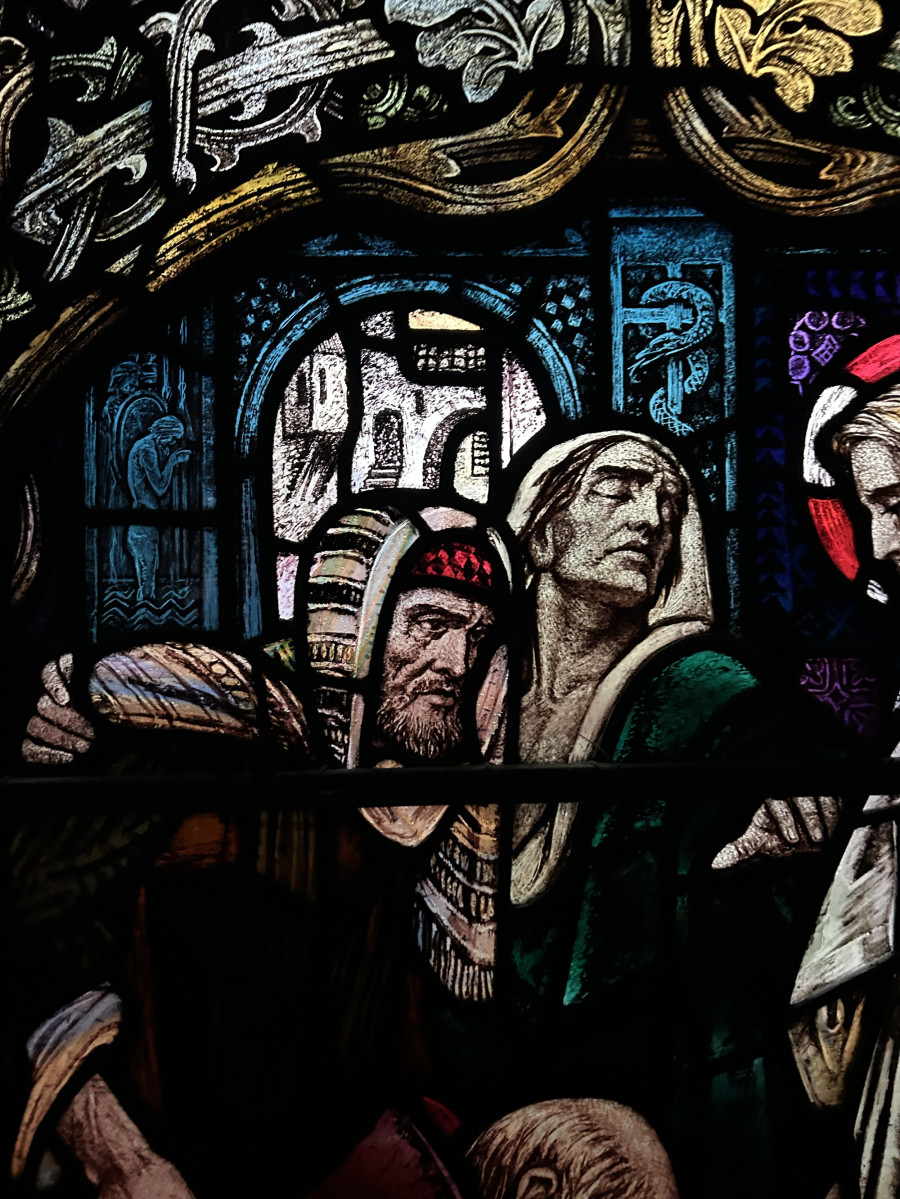
The McCowan window depicts the events of Holy Week, and consists of three large, detailed lancets and a trefoil situated above. The McCowan window, installed in 1913-14, was the gift of Mr and Mrs David McCowan of 9 Park Circus Place. David McCowan was a senior partner of the marine insurance brokers and underwriting firm, Messrs William Euing & Company. The window was demounted and placed in storage by FACT THREE in 2007 due to its condition until work on a new use for the building could get underway.
The second Webster window, commonly referred to as the Templeton window, is still in situ in its original location. Named after the Misses Templeton, who gifted the window, it depicts the life of Christ in eight large scenes with a panel dedicated to the memory of their mother, brother, and sister and in appreciation of their present minister. Misses Templeton were the spinster daughters of James Templeton, a long-serving Manager and Elder of Lansdowne UP Church. Like the McCowan window, the main scenes of the window are surrounded by detailed motifs and symbols.